Gas Station Property Appraisal – Unit of Comparison
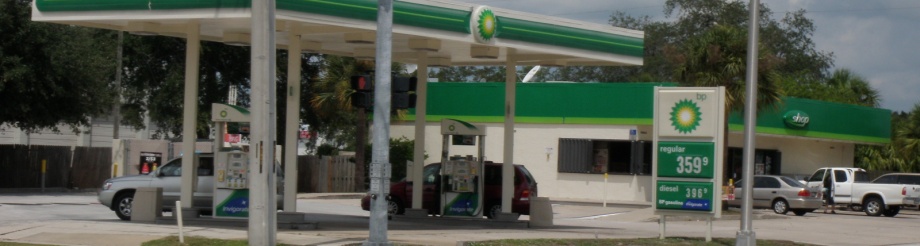
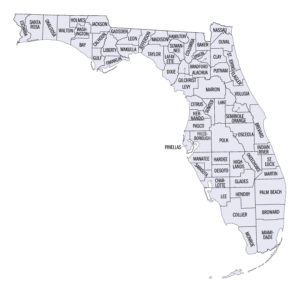
I recently completed Commercial real estate appraisal work in Central Florida on several convenience store/gas station properties. To make an estimate of market value, it was necessary to use a unit of comparison method that is commonly accepted by those buyers and sellers who are actively engaged in trading this particular type of commercial real estate. In the case of convenience store/gas station property appraisal, there are a few different ways that market participants (as well as a property appraiser) analyze sales, regarding unit prices. The sales valuation could be analyzed based on the price per square foot of a building area, the price per square foot of land area, or the price per fuel pump (although the latter is used less often).
However, the dilemma I was facing was that my property valuation analysis of the sales using any of these variables was resulting in a skewed treatment of the other variables. For example, if there are two gas station/convenience store properties that have the same size building but different number of gas pumps and different site sizes, than analyzing the sales based solely on the price per square foot of building area was resulting in unequal treatment of the sales. Although adjustments could be made for the differences in land size, number of pumps and/or building sizes, each component (land, pumps and building) consists of a significant portion of the overall sale price, and could require sizeable adjustments, sometimes in excess of 100% of the sale price.
In order to minimize this confusion, I performed a land valuation for each convenience store/gas station sale property through sales of comparable vacant parcels which have recently sold, and extracted that land value from the overall sale price, leaving only the residual price to the building improvements. From there, the sales were analyzed based on their price per square foot of building area only, with adjustments for the differences in the number of gas pumps (as well as other physical features) made based on cost data obtained from a national cost estimating service. In this instance, I used the Marshall Valuation Service, which is the market standard for cost estimating services in appraising commercial properties. After reconciling a unit price to the building only for the subject, the land value, which was also estimated by using similar land sales in the market area, was added for a total value of my subject property by the Sales Comparison Approach.
Extracting the land value from each of the sales and adding back the subject’s estimated land value eliminates the need to make adjustments for location, as well as floor area ratio, since these items of comparison are intrinsic in the land value. In the end, my property analysis took a somewhat broad range in unit prices for the convenience store/gas station sale properties and converted it to a nice narrow range which makes more sense to the user of the appraisal.