The Shopping Center Chronicles – Spatial Autocorrelation in Shopping Centers
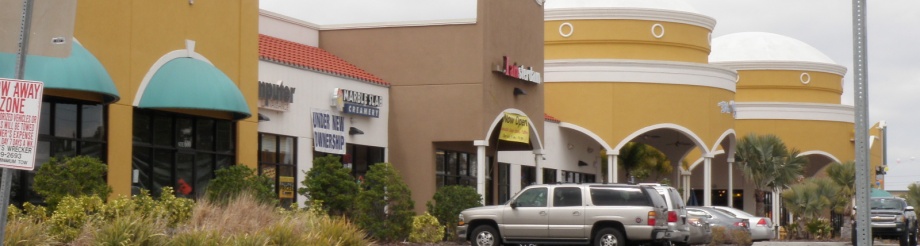
Real estate researchers often study the concept of spatial autocorrelation primarily for the statistical improvements in modeling. This same concept applies to shopping malls and improving their overall layouts.
Spatial autocorrelation is the patterning of mapped residuals (across space) resulting from regressions that involve different locations of observations. In the case of a housing price model, large positive residuals may show up in one neighborhood, while large negatively residuals may show up in another area. This violates the ordinary least squares (OLS) assumption of independently and identically distributed residuals.
Characteristics of mall stores, size, rents, and sales have been shown to vary by location. So, the assumption of independent error terms is not met; store characteristics are spatially dependent. The housing literature is concerned with neighboring properties sharing location characteristics. Spatial dependence has been treated using both a lattice approach and a geo-statistical approach. Treating spatial dependence for mall stores proves to be simpler and more direct.
In shopping malls, clustering of residuals occurs at points along the mall, large positive residuals near the centers of malls, and large negative residuals at the peripheries. Treatment is done by making weighted adjustments to observations to create a more random pattern of residuals along the mall.
The vast majority of stores are located within 700 feet of the center. Residual clustering viewed against radius distance tends to fall at about a 60-degree angle southeast for 200 feet. At 200 feet, residuals are clustered and slightly negative, but beyond 200 feet residuals look homogenous. By reweighting observations to even out spatial error within the first 200 feet, spatial autocorrelation is significantly bettered and regression results are improved.
This is the sixth installment in The Shopping Mall Chronicles. Visit our blog to read the other articles in this series.